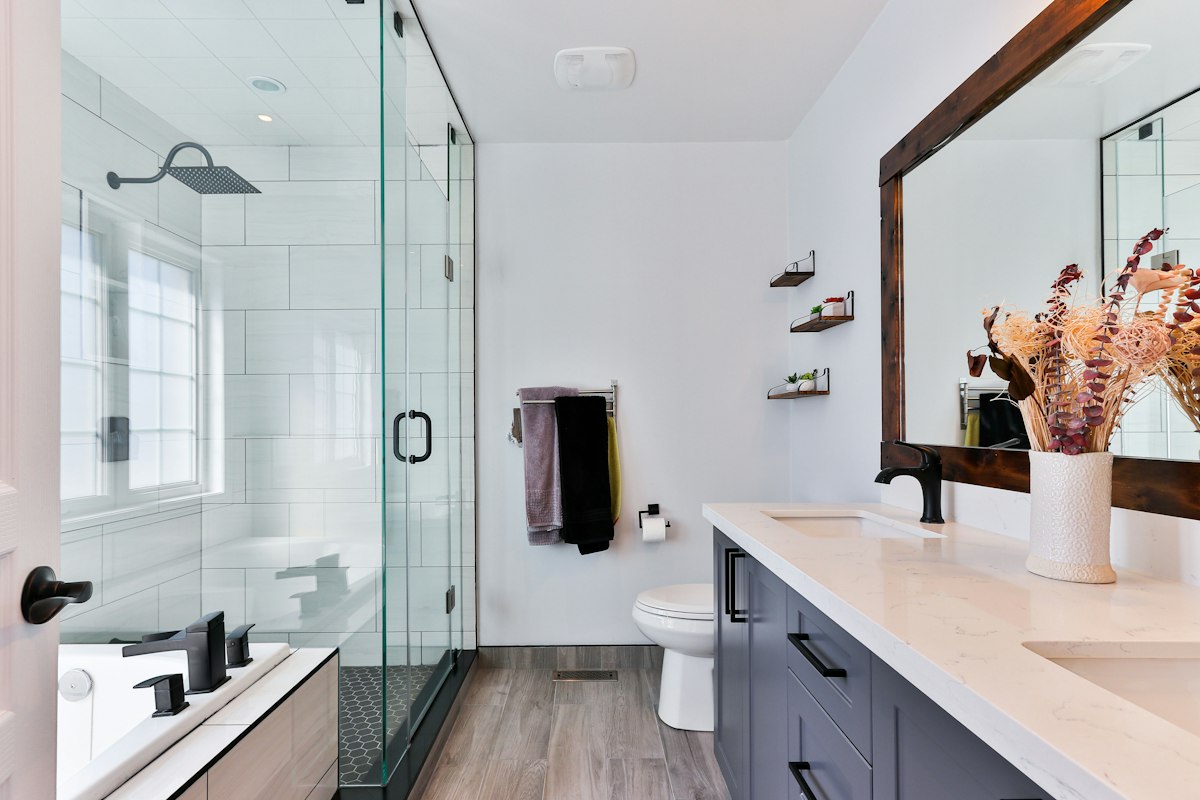
Tile is the most expressive element in a bathroom — it sets the tone for the entire space. After completing dozens of bathroom renovations across the Philadelphia suburbs in 2024, here's what we're seeing homeowners choose, why these choices work, and how to use them well. These are the materials and patterns showing up most often in our custom bathroom projects across Wayne, Villanova, and the broader Main Line.
Large Format Porcelain (Still Dominant)
The large-format tile trend isn't going anywhere. 24"×48" and even 48"×96" slabs create a seamless, minimal look that photographs beautifully and is easy to clean. We're seeing these especially in master showers and as feature walls behind freestanding tubs. Fewer grout lines mean fewer places for grime to collect and a calmer, more expansive feel — a major reason large format reads as "luxury" instantly. Our Floor-to-Ceiling Slab Tile Bathroom shows how dramatic a continuous porcelain surface can be.
Zellige: Handmade Moroccan Tile
The most requested tile of the past two years. Zellige tiles are handmade, slightly irregular terracotta tiles glazed in solid colors — the irregularity creates a beautiful, light-catching texture that's impossible to replicate with machine-made tile. We're using them on shower niches, vanity backsplashes, and full wet walls.
The caveat: zellige requires an experienced installer. The irregularity in thickness means the setting bed needs more attention, and the natural variation in color means the layout has to be dry-laid and blended before anything is set. Our tile team has placed hundreds of square feet of zellige and we know exactly how to make it look intentional rather than uneven. This is one of those materials where the installer matters as much as the tile.
Soft Matte Finishes
Glossy white subway is giving way to matte, chalky finishes in warm whites, soft greige, and sage green. These surfaces feel more organic and less institutional — a natural fit for the warm, spa-influenced direction bathroom design has been moving. Matte finishes also hide water spots far better than high-gloss, which is a genuine day-to-day advantage in a busy family bathroom.
Fluted and Bouclé Textures
Vertical fluting is appearing everywhere — on vanity fronts, shower walls, and even bath surrounds. The ribbed texture catches light beautifully and adds depth without pattern. We're pairing it with smooth stone countertops for maximum contrast. Texture, rather than color or pattern, is increasingly how our clients add interest to a restrained, timeless palette.
Natural Stone and Stone-Look Porcelain
Marble and quartzite remain aspirational for shower walls, niches, and feature surfaces — the veining in a book-matched slab is genuinely architectural. For clients who want the look with less maintenance, today's stone-look porcelain is remarkably convincing and won't etch or stain. Our Hexagon Stone Spa Master Bath and Macaubas Azure Statement Bath both show how stone can anchor a room. If you're weighing stone against engineered options, our countertop material guide applies directly to bathroom surfaces too.
Mosaic and Penny-Round Shower Floors
While walls trend toward large format, shower floors are moving the opposite direction — smaller mosaics and penny rounds. There's a practical reason: more grout lines mean more slip resistance underfoot, and small tiles conform to the slope toward the drain far better than large ones. Pairing a large-format wall with a small-mosaic floor is one of the most reliable looks in contemporary bathroom design.
How to Choose Tile That Lasts
Trends are useful, but a bathroom is a long-term investment. A few principles keep your selections from feeling dated in five years:
- Let one element be the star. A dramatic zellige wet wall or a book-matched stone niche is plenty. Surround it with quiet, neutral surfaces.
- Choose finish for function. Matte on floors for slip resistance; easy-clean surfaces in high-splash zones.
- Think about grout as a design choice. Grout color can make a pattern recede or pop. It's not an afterthought.
- Buy from the same lot. Dye lots vary, especially with handmade tile. We order with overage from a single lot to ensure consistency.
For more on where bathroom design is heading in our area, see our companion piece on Main Line bathroom trends, and if you're adding comfort underfoot, our guide to heated bathroom floors pairs perfectly with any tile selection.
See It in Person
Tile is notoriously hard to judge from a small sample or a screen — scale, light, and finish change everything. That's why full-scale vignettes matter. When our Ambler showroom opens, you'll be able to see tile walls, vanities, and fixtures together at full size. In the meantime, we bring curated material selections to your free in-home consultation, where we can see how each option reads in your actual light. You can also browse our completed bathrooms for inspiration, or explore bathroom design across Ambler and the surrounding communities.
Color Directions for 2025
After years of stark white-on-white, our clients are embracing warmth and depth. The palettes we're specifying most often this year center on warm neutrals — greige, mushroom, soft taupe — accented by nature-inspired tones like sage green, warm terracotta, and deep moody blues for a single feature wall or vanity. The thread connecting all of them is restraint: one or two considered colors, layered with texture, rather than a busy mix. It's a more sophisticated, more permanent look than the trend-driven bathrooms of the last decade.
Grout, Trim, and the Details That Read as Custom
The difference between a good tile job and a breathtaking one usually comes down to details most people never consciously notice:
- Grout color and width: A matched grout lets a large-format wall read as a single seamless surface; a contrasting grout turns a simple tile into a graphic statement. It's a design decision, not a default.
- Edge treatments: Mitered edges and proper trim pieces eliminate the cheap look of bullnose or visible tile edges. This is painstaking work that separates premium installations.
- Layout and centering: A great installer plans the layout so cuts fall in the least conspicuous places and patterns center on focal points like the niche or the mirror.
- Niches and benches: Recessed niches and integrated benches, tiled to match, feel architectural and intentional rather than added-on.
These are exactly the details our tile team obsesses over, and they're why a B&B bathroom photographs the way it does.
Pairing Tile With Stone and Fixtures
Tile never lives in isolation. The most successful bathrooms coordinate tile with the countertop stone, the metal finishes, and the fixtures into one cohesive story. Warm brass or champagne bronze pairs beautifully with creamy zellige and warm-veined stone; brushed nickel and matte black lean cooler and more contemporary. We help clients make these decisions together rather than one at a time, which is the surest way to avoid a room full of individually nice choices that don't quite harmonize. The same logic that governs countertop selection applies here.
Maintenance: Keeping Tile Looking New
Beautiful tile should also be livable. A few choices at the design stage make long-term maintenance far easier: sealed natural stone (and a realistic conversation about its upkeep), large-format porcelain to minimize grout, and matte finishes that hide water spotting. We always advise clients on exactly how to care for the specific materials they choose, so the bathroom looks as good in year five as it did at the final walkthrough.
Trends We'd Gently Steer You Away From
Part of our job is honesty about what won't age well. We're cautious about hyper-specific patterns that will feel dated quickly, overly busy multi-tile combinations that fight for attention, and novelty shapes used across large areas. A bathroom is a long-term investment; the goal is something that feels current today and timeless in a decade. Our companion piece on Main Line bathroom trends goes deeper on the features that have genuine staying power.
From Inspiration to Installation
Choosing tile is genuinely difficult from a tiny sample — scale and light change everything. We bring curated selections to your free in-home consultation so you can see how each option reads in your actual space, and when our Ambler showroom opens you'll be able to view full-scale vignettes in person. Explore our bathroom renovation services, browse completed bathrooms, or see our work across Wayne and Villanova to start imagining your own.
Frequently Asked Questions
What tile is most popular for bathrooms right now? Large-format porcelain dominates walls and showers for its seamless look, while handmade zellige is the most-requested accent tile. On floors, smaller mosaics and penny rounds are favored for slip resistance.
What tile finish is best for a bathroom floor? A matte finish, for slip resistance and because it hides water spots far better than gloss. Pair a matte mosaic floor with a large-format wall for a reliably elegant result.
Is natural stone or porcelain better for a bathroom? Natural stone offers unmatched veining and character but requires sealing and care; today's stone-look porcelain is remarkably convincing and won't etch or stain. The right choice depends on your maintenance tolerance — see our material guide.
How do I choose tile I won't regret? Let one element be the star, keep everything else quiet, and coordinate tile with your stone and fixtures from the start. We bring curated selections to your free consultation and will preview full-scale vignettes when our Ambler showroom opens. Explore our bathroom services to begin.
How Tile Fits the Bigger Bathroom Picture
It's worth remembering that tile, for all its visual impact, is one part of a complete room. The most beautiful bathrooms we build succeed because every element — tile, stone, vanity, lighting, glass, and fixtures — was chosen as part of a single, coherent vision rather than assembled piecemeal. A stunning zellige wall can fall flat next to the wrong vanity, and a gorgeous freestanding tub deserves a backdrop that lets it shine. This is where working with a design-build team pays off: we make these decisions together, in your space and your light, so the finished room feels effortless and intentional.
Consider how the pieces reinforce one another in our completed projects. The continuous slab tile in our Floor-to-Ceiling Slab Tile Bathroom works because the fixtures and vanity stay quiet and let the stone speak. The texture in our Hexagon Stone Spa Master Bath is balanced by restrained color. Each room has a clear hierarchy — one star, a supporting cast — and that discipline is what separates a timeless bathroom from a busy one.
If you'd like to think through tile as part of a complete design rather than in isolation, that's exactly the conversation we love to have. Read our companion guides on Main Line bathroom trends and heated bathroom floors, browse our completed bathrooms, or learn about our bathroom renovation services. When you're ready to choose materials for your own project, schedule a free in-home consultation and we'll bring curated selections to you.
Tile is the second-largest cost driver in most bathrooms; our bathroom remodel cost guide shows where it lands by tier.
Start Your Project
Ready to Stop Reading and Start Building?
The consultation is free. We'll visit your home, understand your vision, and show you what's possible.
Or call: 267-402-8758