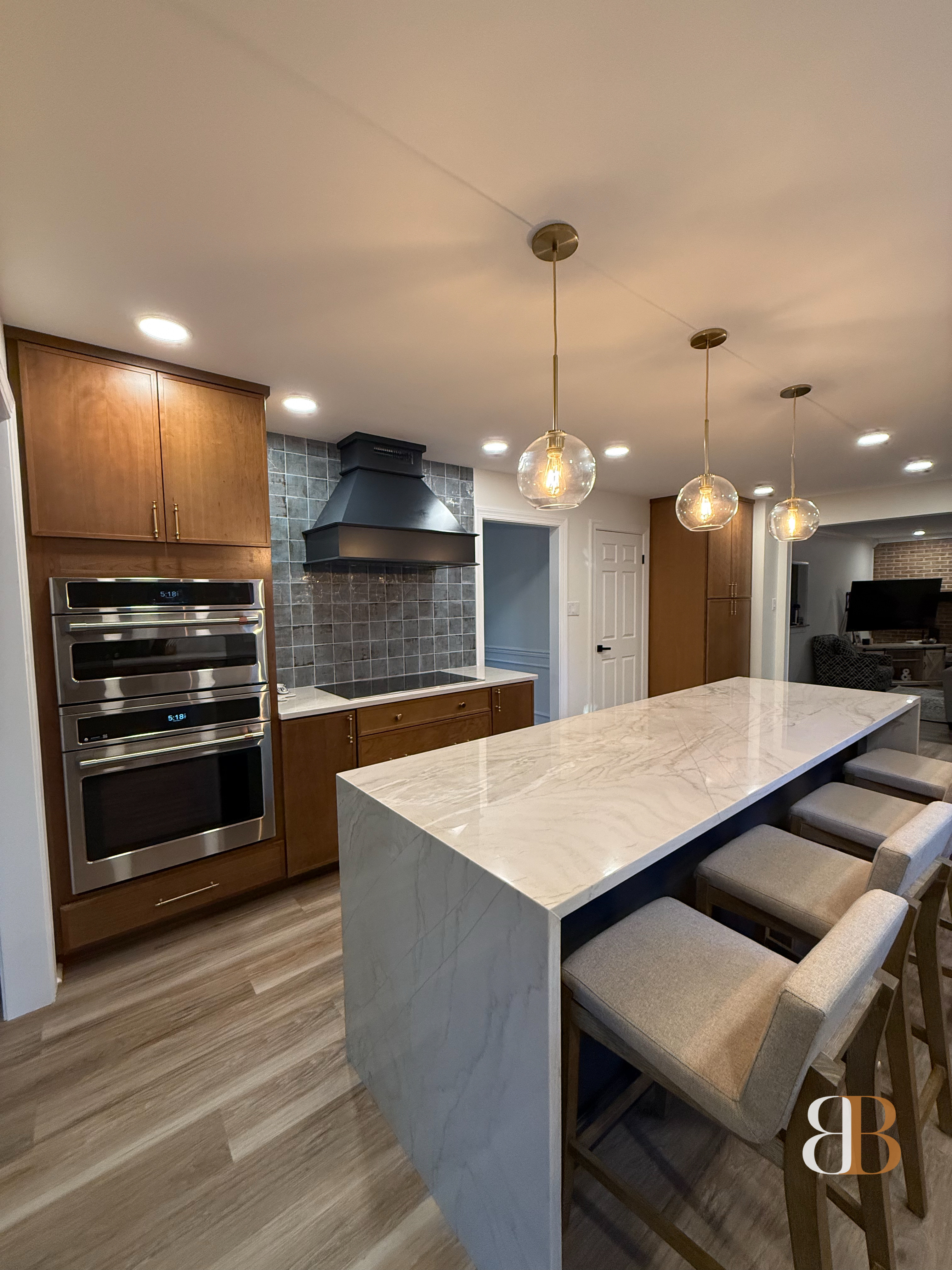
Here's the short version. If hosting Thanksgiving or Christmas means the turkey owns the only oven, three people are fighting over one sink, and your guests are standing exactly where you need to work, you don't necessarily need a bigger kitchen. You need four things: a second oven, counter space next to the fridge and the range, an island that works as a buffet instead of a barricade, and a path that keeps guests out of the cooking zone. Plan it this winter, build it in the spring, and it's ready long before next November.
Plenty of kitchens in Ambler, Blue Bell, Newtown and along the Main Line were designed for a family of four on a Tuesday. They hold up fine 360 days a year. Then the holidays show you every weak spot at once.
Where Holiday Kitchens Break Down
One oven. A turkey can take most of the afternoon. Meanwhile the stuffing, the sweet potatoes, the rolls and two pies all need an oven too. One oven means a schedule, and a schedule means something gets served cold.
No place to set anything down. Kitchen planners use a rule of thumb from the National Kitchen & Bath Association: at least 15 inches of counter next to the fridge, and landing space on both sides of the cooktop. A lot of older kitchens have a fridge jammed into a corner with nothing beside it, so the gravy boat ends up on top of the microwave.
The peninsula. In plenty of 1980s and 1990s colonials, a peninsula closes the kitchen off from the family room. On a holiday, it becomes a wall with people leaning on both sides.
Guests in the work aisle. The NKBA's planning guidelines call for a 42 inch work aisle for one cook and 48 inches when more than one person cooks. Many older kitchens were drawn for one cook. When your sister jumps in to help and your uncle wants a drink from the fridge, the aisle stops working.
Drinks in the middle of everything. If the only place to get ice and a glass is between the sink and the range, every guest walks through the busiest spot in the house.
What We Change When Someone Says "We Host"
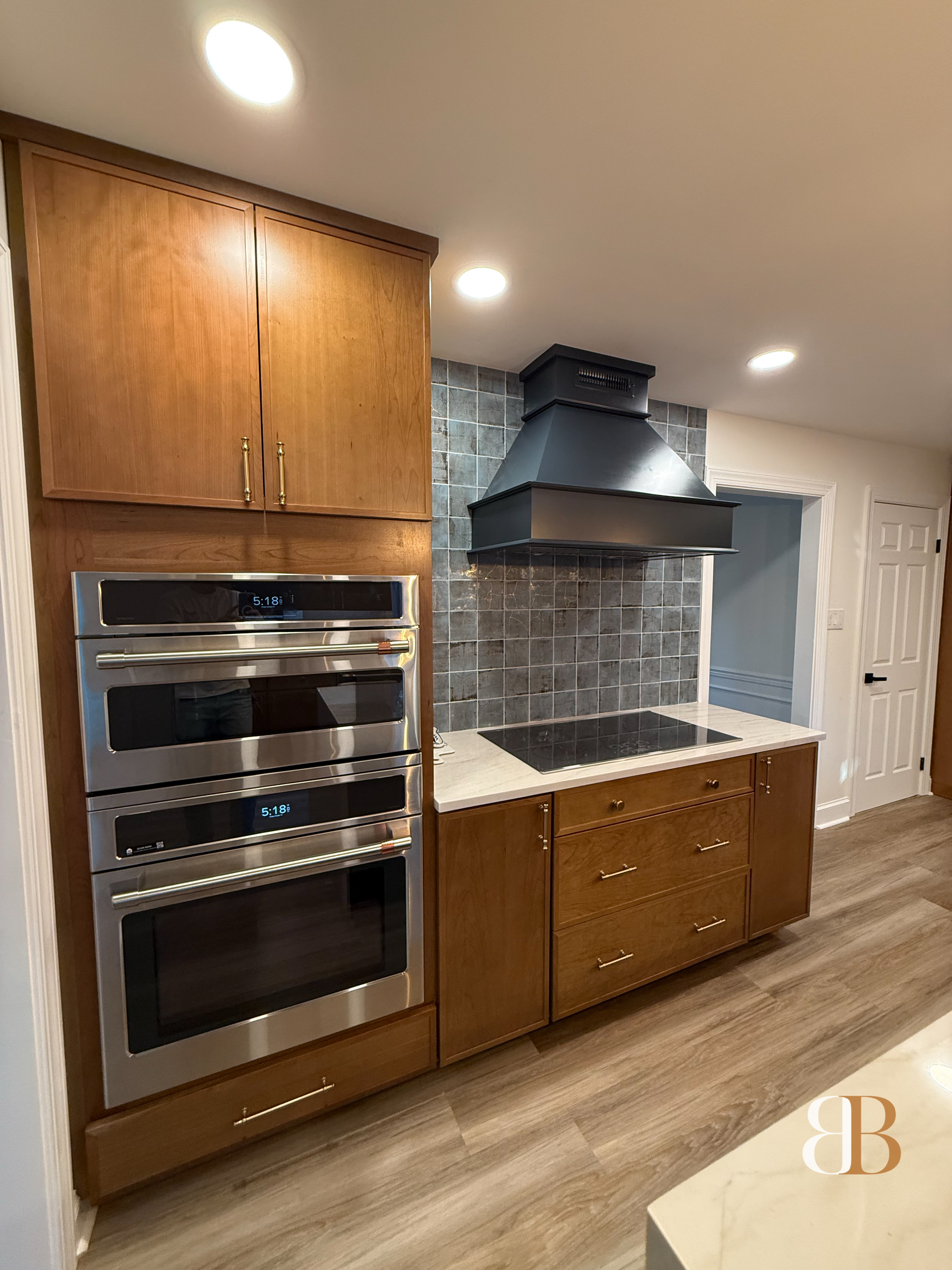
A second oven
This is the single biggest upgrade for people who host. There are two common ways to get it. A double wall oven stacks two full ovens at chest height, which is easier on your back for a 20 pound bird. A 48 inch range gives you a big oven and a smaller one plus more burners, but it needs a serious hood. Which one fits depends on your wall space and how you cook, and it's one of the first things we settle in design.
An island that serves, not blocks
The best hosting islands put seating on the guest side and work space on the cook side. People sit, talk and graze without stepping into the aisle. In our Ambler kitchen, we took out the peninsula and a separate sitting area and ran one long island instead. The whole first floor opened up, and construction took about seven weeks.
A drinks station outside the work zone
A beverage fridge or a small bar run at the end of the kitchen, away from the range and the main sink, gives guests their own spot. Our Newtown kitchen has a wide beverage station and a separate cooking area for exactly that reason. Getting it to work meant taking out walls and moving two exterior doors, a ten week build.
Landing space and a second sink
Counter on both sides of the range, counter next to the fridge, and in larger kitchens a prep sink on the island so one person can rinse vegetables while another does dishes. These don't photograph as dramatically as a new island, but on a holiday they're what you notice.
Storage for the stuff you use twice a year
Roasting pans, platters, the gravy boat, the big stock pot. Deep drawers and a tall pantry cabinet keep them out of the garage. In our Bryn Mawr kitchen, full custom cabinetry with appliance garage drawers keeps small appliances off the counters when the counters are covered in food.
Can It Be Done Before This Christmas?
No, and anyone who says yes isn't planning to do it properly. From the first design meeting to the final walkthrough, a full kitchen takes four to six months, because design decisions and cabinet lead times happen before anything comes out of your house. Construction itself runs six to ten weeks for most kitchens and longer when walls move. We break that down in our kitchen timeline guide.
Next Thanksgiving is a very realistic target, though. Design and selections in January and February, cabinets ordered by early spring, construction in late spring or early summer, and you're cooking in it with months to spare. We explain why that schedule works in why the best kitchens get planned in January.
What It Costs
Our kitchens in 2026 run $50,000 to $135,000 by size: small $50,000 to $60,000, medium $60,000 to $75,000, large $75,000 to $90,000 and extra large $90,000 to $135,000. Adding a second oven, moving walls or going full custom pushes a kitchen toward the top of its range. The kitchen cost guide breaks down what moves the number.
If your kitchen fought you this Thanksgiving, write down exactly where it happened while it's fresh. That list is the best brief we can get. When you're ready, fill out our inquiry form for a free in home consultation, or see more of our kitchen remodeling work in Ambler, Newtown and Bryn Mawr.
Frequently Asked Questions
What is the best kitchen layout for hosting holidays?
One with a second oven, counter space next to the fridge and on both sides of the range, an island with seating on the guest side, and a drinks area outside the cooking zone so guests don't walk through the work aisle.
Is a double wall oven or a 48 inch range better for entertaining?
Both give you two ovens. A double wall oven puts both at a comfortable height and frees the range wall. A 48 inch range adds burners but needs a larger hood. Wall space and how you cook usually decide it.
How wide should a kitchen aisle be for two cooks?
The NKBA recommends 48 inches between counters and appliances when more than one person cooks, and 42 inches for one cook.
Can I get a kitchen remodeled before the holidays?
Only if you start early. A full kitchen takes four to six months from first meeting to finish, so for Thanksgiving, start design in the winter and build in spring or early summer.
Who designs kitchens for entertaining in Montgomery County, PA?
B&B Associates Creations is a design build firm in Maple Glen that designs and builds kitchens across Montgomery County, Bucks County and the Main Line, including second ovens, hosting islands and beverage stations. Consultations are free.
Start Your Project
Ready to Stop Reading and Start Building?
The consultation is free. We'll visit your home, understand your vision, and show you what's possible.
Or call: 267-402-8758